
What are molar teeth implants?
A molar tooth implant is a permanent treatment that fills the gap left by the loss of back teeth, which bear the majority of chewing weight, using the same principle as a natural tooth root. Simply put, an artificial root placed in the jawbone takes over the function of the missing molar tooth. It doesn't fill an invisible gap but rather addresses a deficiency that is not noticeable but is felt. Why replace missing molar teeth?
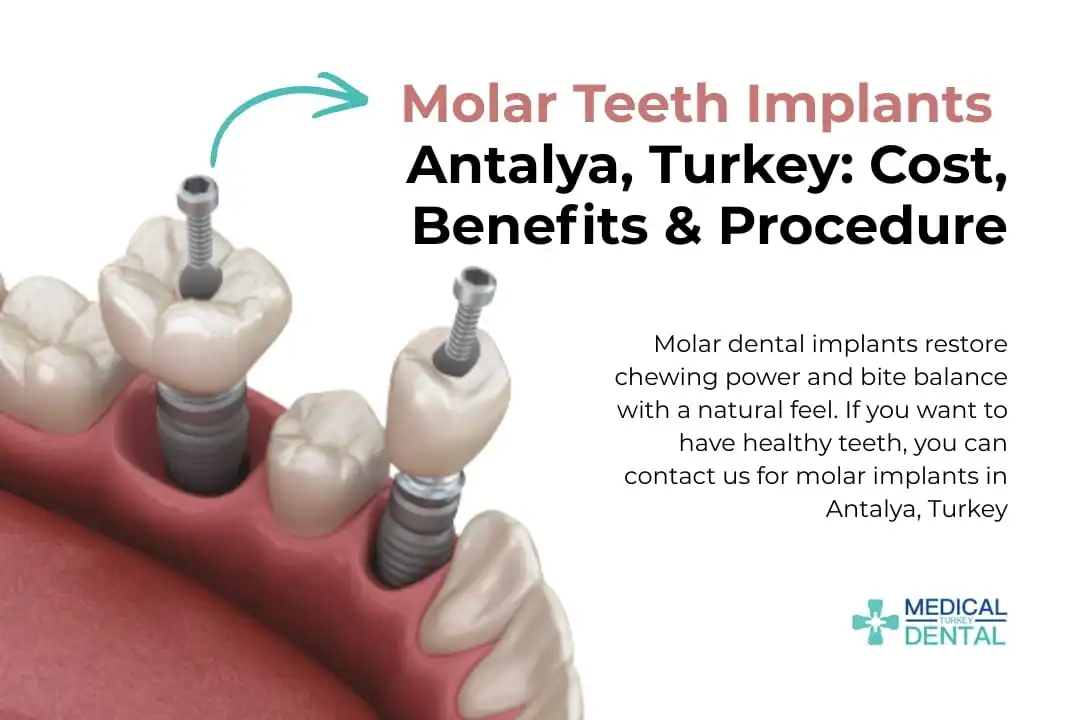
Benefits of molar implants in Turkey
Dental implants are the only tooth replacement method that mimics both the root and the visible crown of a natural tooth. The application process can be time-consuming and may cause short-term discomfort; however, especially for patients with missing molars, this method is an extremely effective and permanent solution thanks to the chewing power, stability, and long-term comfort it provides.
The main benefits of molar teeth implants are as follows:
- Provides chewing stability: Dental implants are stable. They don't move. They provide confidence even with hard foods. The chewing sensation is very similar to a natural tooth.
- Protects surrounding teeth: The implant prevents neighbouring teeth from shifting into the gap. Thus, the tooth alignment is not disrupted.
- Maintains bite balance: Molars ensure the even distribution of biting force. Implants restore this balance.
- Keeps the jawbone active: When there is no tooth root, the bone resorbs over time. The implant transmits the load to the bone. The bone remains alive. This is the most effective way to prevent bone loss seen after tooth loss.
Who is a good candidate for molar teeth implants?
A suitable candidate for a molar implant is someone whose jawbone is strong enough to support the implant and who does not have any serious health issues that would negatively affect the healing process. In short: most patients are candidates for implant treatment if their oral and general health balance allows it. That is, those with sufficient jawbone density, who avoid smoking and tobacco products, and who do not have serious gum disease are suitable candidates.
An overview of dental implant treatment in Turkey
Implant surgery is a phased treatment that restores a missing tooth, starting from the root. Dental implant treatment in Turkey begins with examination and planning; bone support is provided if necessary, and then the implant is placed in the jawbone.
In some patients, new teeth can be fitted the same day; this procedure is called "one-day smile" treatment. However, in most cases, bone and gum healing is awaited for the implant to firmly take hold. During this process, temporary teeth may be used until the implant is ready.
The bone fuses naturally with the implant within a few months, and an abutment and artificial tooth are attached to this solid foundation. The process takes time, but the goal is clear: to obtain a fixed, natural-feeling tooth that can be used safely for many years.
How much does a molar implant cost in Antalya, Turkey?
In implant treatment, many factors will affect the cost, such as the number of implants used and whether additional treatments are needed for the success of the procedure. In this context, you can visit our price page for implant prices in Antalya, Turkey, and get information about our financing options.
Dental bridges or partial dentures may seem less expensive than implants initially, but maintenance and replacement costs can increase over time. Implants, on the other hand, require a higher initial investment but offer a more permanent and predictable solution in the long term. Therefore, when making a decision, it is best to evaluate not only the price but also the long-term cost and comfort together and to clearly discuss all options with your dentist.
Alternatives to molar teeth implants in Turkey
Molar implants are an ideal solution for many people. But they are not the only option. For those who do not want implants or are not suitable candidates for implants, the most common alternatives are dental bridges and removable partial dentures.
The main difference between them is this: The implant screw is fixed to the jawbone. Bridges and partial dentures, on the other hand, rest on the gums and are usually supported by adjacent teeth. So one is like a structure "with its own foundation", while the other works like a solution "leaning against the side walls".
How to choose the right option for you?
Implants are the solution that is "closest to the feeling of natural teeth". Because they fuse with the jawbone and do not touch the neighbouring teeth.
A bridge offers a quick and fixed solution but may require procedures on adjacent teeth.
Partial dentures are a practical alternative for individuals who do not want surgery or are not suitable for implants, but the expectation of stability must be managed correctly. Furthermore, when a missing tooth is not replaced with an implant, the jawbone may not receive sufficient stimulation over time, increasing the risk of weakening.
Choose Medical Dental Turkey for your dental implants
Dental implants restore missing molars with a natural feel, bringing back chewing, biting, and speaking comfort. Medical Dental Turkey makes this process clear, safe, and comfortable with advanced technology and personalised planning. For multiple missing molars, we evaluate options such as implant-supported bridges or partial dentures according to your situation. The goal is simple: permanent, natural-looking results and long-term oral health.
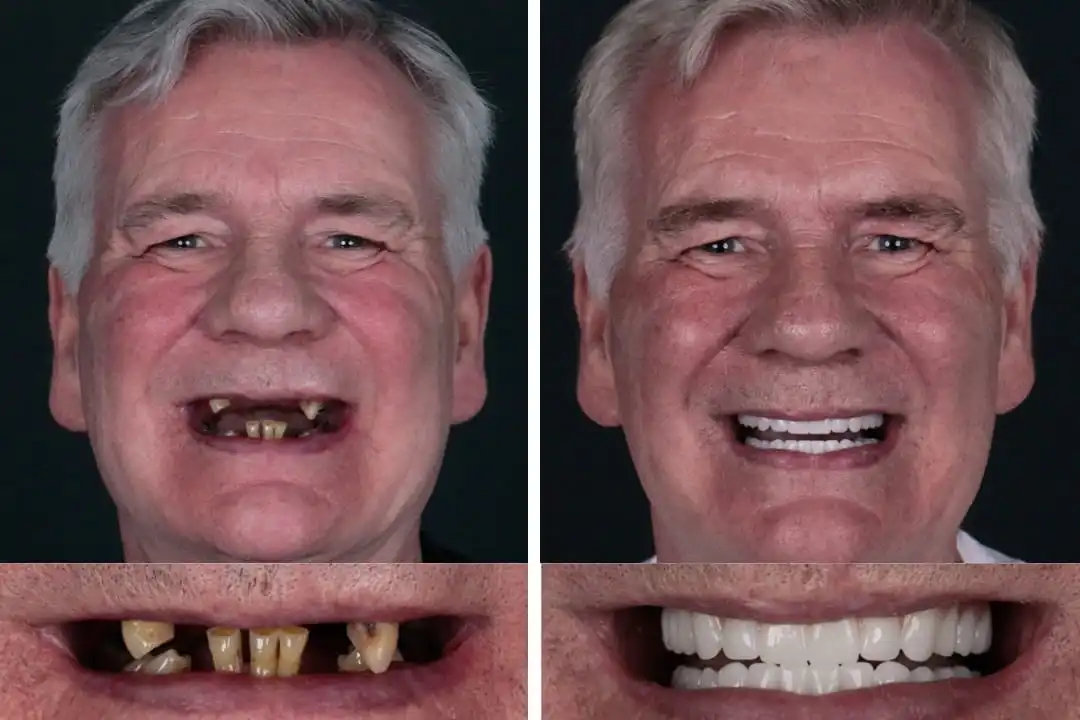
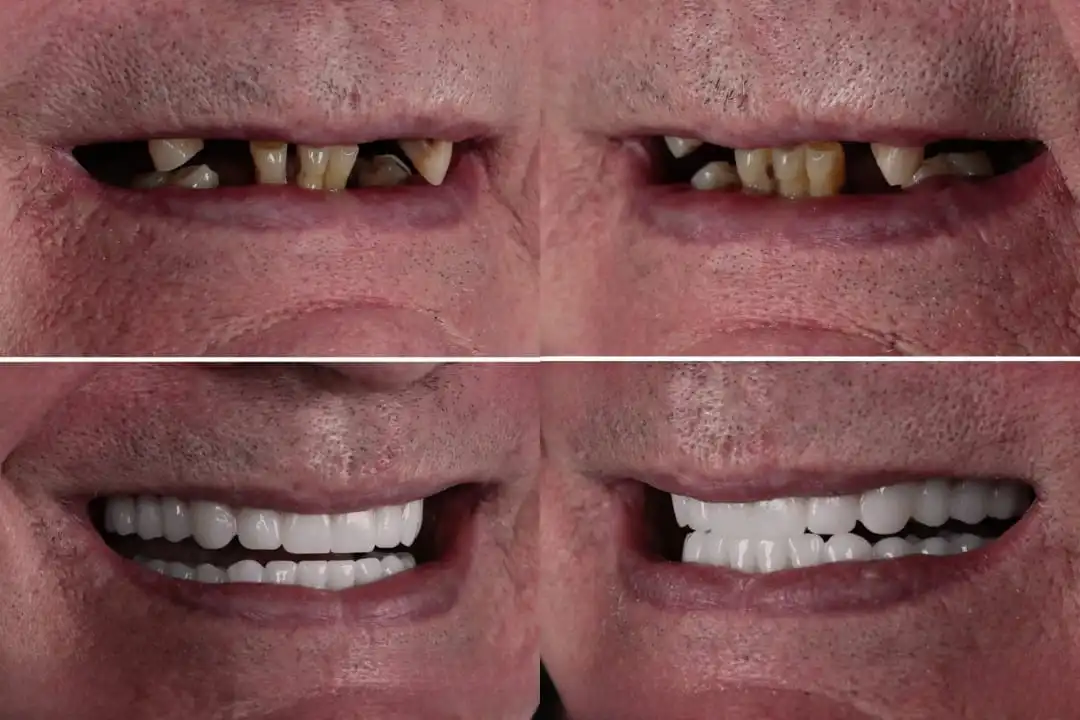
Think of it like a solid structure. If the foundation is laid correctly, the superstructure will stand for years without problems. Our experienced team will create a plan together that suits your needs and budget. If you are ready to regain your smile, contact us today for a free consultation and take the first step with confidence.
FAQs about molar dental implants
Can implants be placed in back molars?
Yes, absolutely. Molars are like the engine of the mouth. They carry most of the chewing load. Implants are designed to carry this load. With proper planning, an implant placed will perfectly take over the function of the missing molar. It provides balance while eating, maintains the bite pattern, and prevents the jaw from being unsupported.
How long do molar implants last?
With proper care, this period is quite long. On average, it is said to be 15-20 years, but this is not an upper limit. In people with good oral hygiene, implants remain problem-free for much longer. Think of it like a quality car. If you maintain it regularly, it won't let you down for years.
Is post-operative care difficult?
Actually, it's not complicated, it just requires attention. You keep the pain under control in the first few days. You continue with soft foods for a while. You don't smoke because it slows down healing. You brush your teeth regularly. These may seem like small steps, but they ensure the implant fuses healthily with the bone.
What are the risks of molar implants?
Molar implants are safe; however, like any surgical procedure, they carry some risks. The most common are infections (peri-implantitis) associated with inadequate oral hygiene, rarely insufficient fusion of the implant with the bone, screw loosening, and cracking of the crowns due to excessive chewing force. These risks can often be largely avoided with proper planning, an experienced dentist, good oral hygiene, and regular check-ups.