
It's perfectly normal to be concerned when you notice a black spot on your tooth or see that the colour of one of your teeth has darkened. A black tooth doesn't always mean a serious problem, but it should definitely not be ignored. Because this colour change can be as harmless as a simple stain, or it can indicate an underlying dental problem.
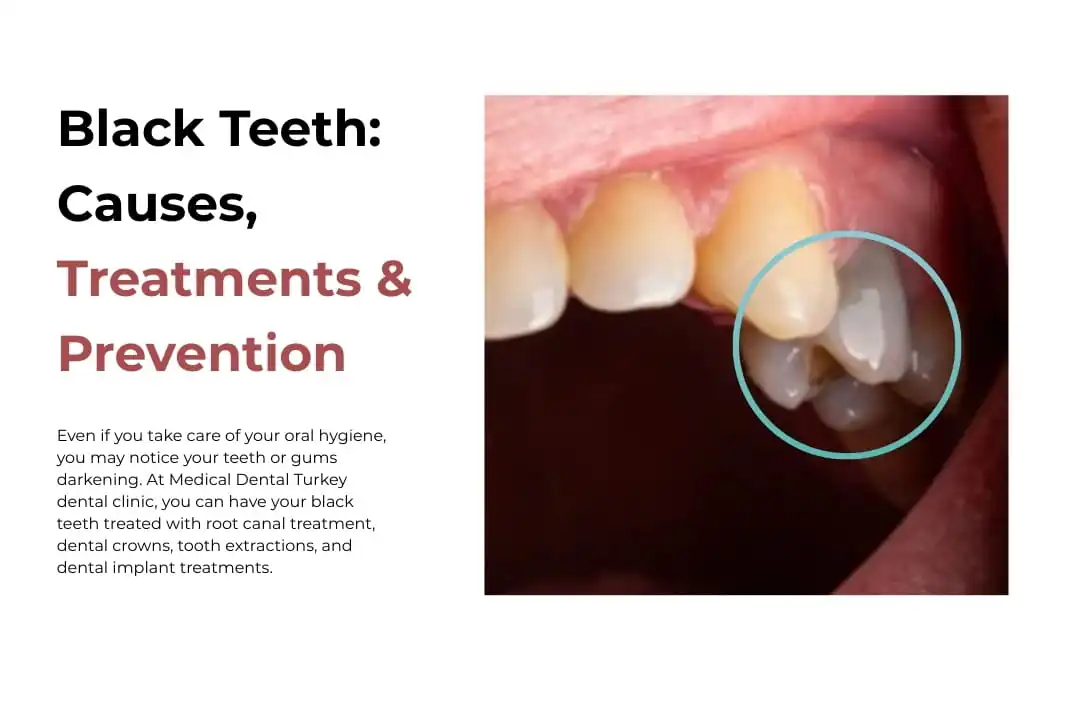
Moreover, even if you pay attention to your oral care, you may notice darkening of your teeth or gums. This is because black teeth are not always caused by a lack of brushing. Dietary habits, trauma to the teeth, loss of tooth vitality, and even genetic factors can influence this process.
In this article, Medical Dental Turkey will clearly and understandably discuss why teeth darken, when you should take it seriously, and how black teeth can be treated.
What are the symptoms of black teeth?
Black teeth often start silently. The first signs are small, but they give clues upon close inspection.
The most common symptom is a dark spot or stain on the tooth. Initially, it appears brown or gray. Over time, the colour darkens.
The surface of the tooth loses its shine. The tooth looks dull and lifeless. This suggests weakening enamel.
In some cases, discoloration begins at the gum line. Thin black lines or pinpoint-like spots may appear.
If the problem starts inside the tooth, it may turn gray or black. This often follows trauma. It is like an apple that looks fine outside but is rotten inside.
Pain is not always present. But advanced decay may cause sensitivity, throbbing, or a bad taste.
In short, black teeth are not just an aesthetic issue. They are the body’s warning sign. Early detection means simpler solutions.
What causes black teeth?
The colour of teeth doesn't change overnight. Often, small details pile up. Eventually, the teeth darken. Sometimes this only happens on the surface, and sometimes it starts from inside the tooth. The important thing is to understand the difference early.
Generally, we group the causes into two categories: external and internal.
- Extrinsic causes: Discolourations originating from the tooth surface. Daily habits are decisive here.
- Internal causes: Discolouration originating from within the tooth. This concerns the living structure of the tooth.
Inadequate oral hygiene and plaque buildup
If you don't brush and floss regularly, plaque will build up quickly. This plaque hardens over time and turns into tartar. Dark lines, especially along the gum line, will form. Most people think it's just a simple stain, but the real problem is cleaning.
Food, drink, and tobacco stains
Coffee, tea, red wine, and smoking adhere to the tooth surface. Initially, only a dull appearance is formed. Over time, this layer thickens. You can think of it like a light-colored shirt getting dirty in the same spot over and over.
Tartar formation
If plaque isn't cleaned, it turns into tartar. Some types of tartar appear dark, even close to black. It is especially noticeable just below the gum line. It doesn't get cleaned at home. A dentist's intervention is required.
Old fillings and dental restorations
Metal-containing old fillings can darken the surrounding tooth over time. Even if the filling is strong, the tooth will appear black. This is generally an aesthetic problem and is corrected by renewing the filling.
Some medications and supplements
Especially liquid iron supplements can cause staining on the tooth surface. Medications that cause dry mouth also make teeth more vulnerable. When saliva decreases, stains adhere more easily.
Darkening due to tooth decay
Decay usually starts small and light-colored. If intervention is delayed, it will worsen. As the inner structure of the tooth is damaged, its colour darkens. “Why did my tooth turn black?” is one of the most common questions.
Impacts and trauma to the teeth
A fall or a hard blow damages the living tissue inside the tooth. Blood flow stops. Teeth turn grey or black over time. It is often seen in a single tooth and is noticed suddenly.
Loss of vitality in the tooth
If the tooth doesn't get enough nourishment, it will start to darken from the inside. This discolouration won't go away with surface cleaning. Root canal treatment or advanced treatments are usually required.
How long does it take for a tooth to go black?
The time it takes for a tooth to darken varies depending on the underlying cause. If the cause is tooth decay, the colour change usually progresses slowly and becomes noticeable over months or even years. In cases of trauma, the process is much faster. Sudden colour changes should always be evaluated by a dentist.
How to get rid of black teeth?
Black tooth treatment is planned based on the factor causing the darkening. However, the goal is always the same: to protect the tooth, improve its aesthetic appearance, and stop the progression of the problem. Surface stains and darkening originating from the tooth's internal structure require different approaches. Therefore, the correct treatment begins with a clear determination of the cause. In black tooth treatments in Antalya, the most suitable method is applied after a personalised assessment.
Treatment of black lines and surface stains on teeth in Antalya
Black lines and surface stains on teeth usually form in areas close to the gum line. Food particles, smoking, and poor oral hygiene over time are the most common causes of this appearance. If you haven't had a professional cleaning for a long time, these lines may become more prominent. In most cases, the appearance improves significantly with professional teeth cleaning. If necessary, teeth whitening in Antalya can help your smile look cleaner and more vibrant.
Treatment of black spots on tooth in Antalya
Black spots on teeth are often a sign of advanced or undetected decay. These spots can sometimes manifest as sensitivity, and sometimes as pain when chewing. The dentist first cleans the decayed tissue and, depending on the situation, applies a tooth-colored filling. If the decay has progressed to the inner structure of the tooth, we can save the tooth with root canal treatment in Antalya.
Tartar
Hardened plaque requires deep professional cleaning.
Dead tooth
A dead tooth usually requires root canal treatment. If the tooth structure can be preserved sufficiently, zirconium crown treatment in Antalya is a frequently preferred solution to ensure both durability and aesthetic appearance. If the tooth tissue is too damaged to be saved, extraction followed by alternative treatments is considered.
Black spaces between teeth
Black spaces between teeth are mostly caused by gum recession. When gums recede, spaces appear between teeth that are seen as "black triangles." Because gums don't return to their original level on their own, the treatment process focuses on preserving gum health and improving appearance. Regular hygiene and, when necessary, cosmetic procedures like bonding can help make these gaps less noticeable.
Severe staining
Professional whitening or stain removal is preferred when the tooth is healthy.
When can tooth decay not be treated?
If decay reaches the inner layers, fillings are not enough. Root canal treatment and a dental crown may be required. If the tooth cannot be saved, treatments of extraction and dental implants in Antalya are considered.
How can you prevent your teeth from turning black?
Tooth discolouration doesn't happen overnight. Small habits accumulate, and over time, black teeth develop. The good news is a few correct daily steps can largely stop this process.
Brush your teeth twice a day. Use fluoride toothpaste and take your time. Don't skip flossing. The spaces between teeth are the favourite areas for black tooth formation. Regular dental checkups are also a surefire way to prevent it. Professional cleanings twice a year catch problems you might not notice early on.
Limit sugary foods and carbonated drinks. These are like water that slowly rots the wood of your teeth. If you smoke, know that you're on the fastest path to dark discolouration. Using a straw when drinking coffee, tea, or red wine is a small but effective measure.
In short, if you protect your teeth every day, serious problems like black rotten teeth usually never occur. Prevention is always easier than seeking treatment later.
FAQs about black teeth
Can a dead tooth turn black?
Yes. An untreated dead tooth darkens over time because it loses nourishment.
Can a broken tooth turn black?
If the damage reaches inner layers, staining and decay risk increases.
I received a blow to my tooth, will it turn black?
If the nerve is damaged, discoloration may follow. Bleeding or sensitivity requires dental evaluation.
Is a blackened tooth always painful?
No. Pain varies. Infection may cause throbbing or swelling.
Can a black tooth be saved?
Often yes, with fillings, root canal treatment, or crowns.
Is it a cavity or a stain?
Cavities feel rough. Stains are smooth. A dentist can confirm.
Will my tooth discolor after root canal treatment?
Discoloration usually starts before treatment. Proper treatment stops progression.
Can I clean black stains at home?
No. Home methods may damage teeth. Dental evaluation is necessary.
How to get rid of black line above crown in Antalya?
If you notice a dark line on your tooth crown, the most effective solution is to replace the old metal-based crown with a metal-free, all-porcelain crown. The black line usually appears because traditional porcelain-metal crowns contain a metal substructure. Over time, this metal can show through the gum line or become visible when the gums recede slightly. With crown replacement in Antalya, you can achieve a natural-looking smile from every angle.